
In today’s digital-first world, social media has become one of the most powerful tools for businesses, creators, and brands. While paid advertising delivers quick visibility, it is organic social media marketing that builds long-term trust, loyalty, and sustainable growth.
Organic social media marketing focuses on growing your presence naturally, without spending money on ads. It relies on content quality, consistency, engagement, and understanding how social media algorithms work. For brands with limited budgets, startups, small businesses, and personal brands, organic social media marketing is not just an option—it’s a necessity.
This comprehensive guide will help you understand what organic social media marketing is, why it matters, and how to build an effective strategy that delivers real results.
What Is Organic Social Media Marketing?
Organic social media marketing refers to using free tools and features on social media platforms to reach and engage your audience. This includes:
- Creating and sharing posts
- Engaging with followers
- Using hashtags and keywords
- Posting stories, reels, and videos
- Building community through comments and messages
Unlike paid social media marketing, organic efforts do not involve sponsored posts or advertisements. Instead, success depends on value-driven content and genuine interaction.
Examples of Organic Social Media Marketing
- Posting educational Instagram carousels
- Uploading YouTube videos optimized for search
- Sharing LinkedIn thought-leadership posts
- Engaging with comments and DMs
- Posting trending Reels or TikTok videos
Why Organic Social Media Marketing Is Important
1. Builds Trust and Authenticity
Audiences trust organic content more than ads. When people discover your brand naturally, it feels genuine rather than forced.
2. Cost-Effective Growth
Organic social media marketing requires time and creativity, not money. This approach is especially suitable for small businesses and startups.
3. Long-Term Results
While ads stop delivering results once the budget ends, organic content continues to generate engagement and reach over time.
4. Improves Brand Loyalty
Regular interaction builds relationships, turning followers into loyal customers and brand advocates.
5. Strengthens Paid Campaigns
A strong organic presence improves the performance of paid ads by increasing brand credibility and engagement signals.
Organic Social Media Marketing compared with Paid Social Media Marketing
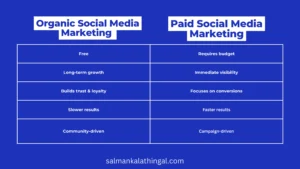
The best strategy often combines both, but organic social media marketing is the foundation.
How Social Media Algorithms Affect Organic Marketing
Every platform uses algorithms to decide which content appears on users’ feeds. While algorithms change frequently, most prioritize:
- Engagement (likes, comments, shares, saves)
- Watch time (for videos)
- Relevance to the user
- Consistency of posting
- Relationship between creator and audience
Understanding algorithms helps you optimize your organic social media marketing efforts.
Core Elements of Organic Social Media Marketing Strategy
-
Define Clear Goals
Decide your goals before you start posting content:
- Brand awareness
- Engagement
- Website traffic
- Lead generation
- Community building
Clear goals guide content creation and performance tracking.
-
Understand Your Target Audience
Successful organic social media marketing starts with knowing your audience:
- Age group
- Interests
- Pain points
- Preferred platforms
- Content consumption habits
Create buyer personas to ensure your content speaks directly to the right people.
-
Choose the Right Platforms
You don’t need to be everywhere. Concentrate on the platforms your audience uses the most.
-
Instagram and TikTok
visual and short-form content platforms.
-
YouTube
– Long-form and evergreen video
-
LinkedIn
– B2B, professionals, personal branding
-
Facebook
– Communities and groups
-
X (Twitter)
– Conversations and trends
-
Create High-Quality Content Consistently
Content is the backbone of organic social media marketing.
Types of Organic Content
- Educational posts
- Entertaining videos
- Inspirational quotes
- User-generated content
- Behind-the-scenes content
- Tutorials and how-tos
Consistency matters more than frequency. It’s better to post 3 quality posts per week than daily low-value content.
5. Use Content Pillars
Content pillars help maintain consistency and clarity. Examples:
- Education
- Tips & tutorials
- Brand stories
- Testimonials
- Industry trends
Having 3–5 content pillars makes content planning easier and more strategic.
6. Optimize Posts for Organic Reach
Captions
- Start with a strong hook
- Keep it clear and valuable
- Include a call-to-action (CTA)
Hashtags & Keywords
- Use relevant hashtags
- Avoid banned or overly generic hashtags
- Use SEO-friendly keywords in captions and profiles
Timing
Post when your audience is most active. Analyze insights to determine the best time.
Platform-Specific Organic Social Media Marketing Tips
Organic Instagram Marketing
- Focus on Reels for reach
- Use carousels for saves
- Engage within the first hour
- Use trending audio
Organic Facebook Marketing
- Leverage groups
- Share long-form posts
- Encourage discussions
Organic LinkedIn Marketing
- Share personal insights
- Post consistently
- Use storytelling
- Engage with comments
Organic YouTube Marketing
- Optimize titles and descriptions
- Focus on watch time
- Use thumbnails strategically
Organic TikTok Marketing
- Follow trends quickly
- Hook viewers in first 3 seconds
- Post consistently
Importance of Engagement in Organic Social Media Marketing
Engagement is the fuel that drives organic reach.
Ways to Increase Engagement
- Ask questions
- Use polls and quizzes
- Respond to comments
- Reply to DMs
- Encourage user-generated content
The more people interact with your content, the more algorithms push it.
Content Calendar for Organic Social Media Marketing
A content calendar helps you remain consistent and well organized..
Benefits of a Content Calendar
- Saves time
- Improves consistency
- Aligns content with goals
- Reduces last-minute stress
Plan weekly or monthly, including post types, captions, hashtags, and publishing times.
Measuring Organic Social Media Marketing Performance
Track performance to improve results.
Key Metrics
- Reach & impressions
- Engagement rate
- Follower growth
- Website clicks
- Saves & shares
Use native analytics tools like Instagram Insights, LinkedIn Analytics, and YouTube Studio.
Common Organic Social Media Marketing Mistakes
- Posting without a strategy
- Ignoring engagement
- Inconsistent posting
- Copying competitors blindly
- Focusing only on followers, not value
- Avoid these mistakes to maximize results.
Organic Social Media Marketing for Small Businesses
Small businesses benefit greatly from organic strategies:
- Builds local trust
- Strengthens customer relationships
- Improves word-of-mouth marketing
Focus on storytelling, customer testimonials, and community engagement.
Future of Organic Social Media Marketing
Organic social media marketing is evolving with:
- AI-powered content recommendations
- Short-form video dominance
- Social SEO
- Community-based marketing
- Authentic and creator-led content
Brands that focus on value, authenticity, and consistency will continue to win.
Final Thoughts
Organic social media marketing is not about quick wins—it’s about building meaningful connections over time. While results may take longer compared to paid ads, the impact is deeper and more sustainable.
By understanding your audience, creating valuable content, staying consistent, and engaging genuinely, you can grow your brand organically on social media without spending on ads.
Whether you’re a business owner, marketer, or creator, mastering organic social media marketing is one of the most valuable digital skills today.